Claiming Your Dental Costs at Tax Time
Every year from November into the spring, patients at our downtown Maple Ridge office ask us the same question at the front desk: can the part of the dental bill that insurance didn’t cover go on my tax return? For many families the answer is yes. You can claim eligible dental expenses on your Canadian tax return for amounts you paid and will not be reimbursed, as part of the medical expense tax credit, subject to a threshold based on your income. We bill insurance directly, so most patients only pay the balance their plan leaves behind, and that balance, along with any treatment that wasn’t covered at all, is exactly what the CRA rules are about. Below is how it works in plain language, using the CRA’s own guidance. Keep in mind that this is general information, not tax advice, and an accountant can tell you how it applies to your situation.
Quick answer: eligible dental treatment you paid for yourself, and were not reimbursed for, can be added to your medical expenses for any 12 month period ending in the tax year. Your total is then reduced by the lesser of 3% of your net income or a set dollar amount ($2,834 for 2025), and what remains goes toward the credit.1
Which Dental Costs Qualify
According to the CRA, dental services paid to a medical practitioner, dentures, dental implants and orthodontic work all count as eligible medical expenses. Purely cosmetic procedures do not, and the CRA specifically names teeth whitening as not eligible, so it is worth keeping the treatment description with each receipt. If a visit included both restorative and cosmetic work, ask us for an itemized receipt so you and your accountant can see which charges are eligible. The other key rule is reimbursement. You can only claim the part you have not been and will not be reimbursed for, so amounts your insurance pays cannot be included. For example, if an eligible treatment costs $1,000 and your insurer pays $700, the remaining $300 may count, as long as you paid it and no further reimbursement is due. Premiums you pay to a private health services plan can also qualify when at least 90% of the premiums are for eligible medical expenses. If you are not sure how much your plan covers in the first place, our post on how much of your dental bill insurance covers walks through the usual coverage levels.
| Dental cost | Can it count toward the credit? |
|---|---|
| Dental services paid to a dentist | Yes, the part you paid and were not reimbursed for |
| Dentures and dental implants | Yes |
| Orthodontic work | Yes |
| Teeth whitening and other purely cosmetic procedures | No |
| The portion your insurance paid | No |
| Premiums for a private health services plan | Yes, if 90% or more of the premiums are for eligible medical expenses |
How the Claim Works at Tax Time
The CRA lets you total eligible expenses paid during any 12 month period that ends in the tax year, as long as you did not claim them the year before. That flexibility helps families whose biggest dental costs fall across two calendar years, such as a crown in the fall and an implant in the spring, because you can choose the 12 month window that groups the most eligible costs together. For a 2025 return, for example, the period must end in 2025. Line 33099 is for expenses for you, your spouse or common law partner and your children under 18, and line 33199 is for other dependants, such as an adult child or a parent who depended on you for support, with the threshold for each dependant based on that dependant’s own net income. For 2025, the total on line 33099 is reduced by the lesser of 3% of your net income or $2,834, and the CRA updates the dollar amount each year, so always use the figure for the year you are filing. You don’t send receipts with your return, but you do need to keep them in case the CRA asks to see them later.
Putting it together usually takes four steps:
- Gather your dental receipts and your insurance statements for the year, so you can see what you paid and what was reimbursed.
- Set aside anything purely cosmetic, such as whitening, and any amount your plan paid.
- Choose the 12 month period ending in the tax year that gives you the most eligible expenses not claimed before.
- Enter the total on line 33099 or 33199 and keep all of your receipts with your tax records.
Timing matters at this time of year, too. Many dental plans renew on January 1, so treatment that uses up this year’s benefits before they reset can lower what you pay out of pocket, and whatever balance remains may still count toward your medical expenses. Our post on whether your dental benefits reset on January 1 explains how to check your plan year. Because we bill insurance directly, your receipts from us show what was billed to your insurer and the balance you paid yourself, which makes the year end paperwork much simpler.
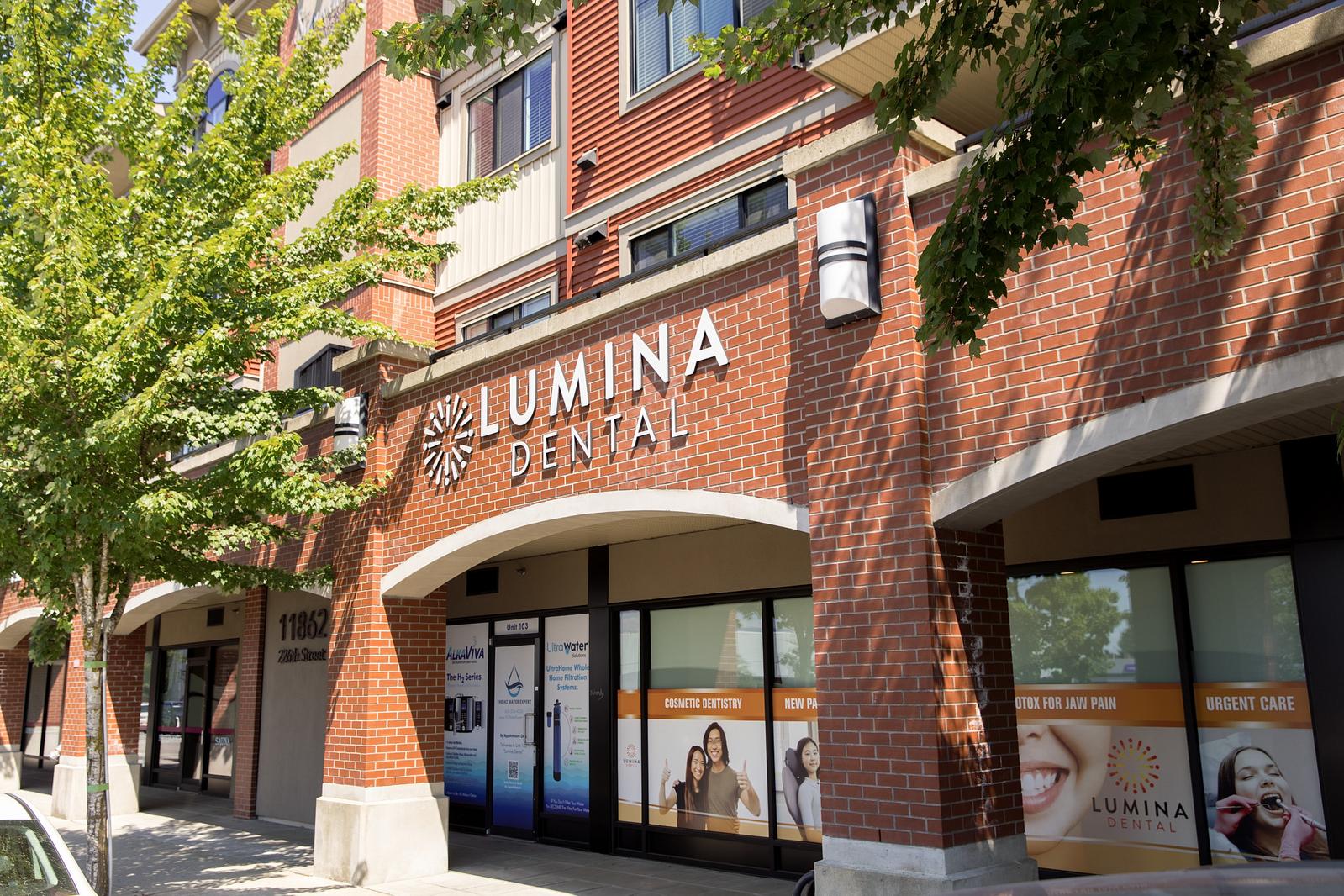
If you have treatment you have been putting off, booking before the end of the year lets you use this year’s benefits and keep your receipts organized for tax time. Dr. Jiang and our team are open Monday and Wednesday from 11am to 7pm, Tuesday and Thursday from 9am to 5pm, and Friday and Saturday from 9am to 3pm, and we are happy to provide itemized receipts for your records. You can book your appointment at Lumina Dental in Maple Ridge online.
Reference